The Difference Between a Professional Delivery Skipper and a “Skipper for Hire”
If you’ve started looking for someone to move your yacht, you’ve probably noticed there’s no shortage of people offering to do it. Search online, ask around a marina, or join a few sailing groups and you’ll quickly find skippers advertising delivery services. Some have impressive biographies, some have competitive prices, and many genuinely believe they’re capable of the job.
The problem is that there is no recognised professional standard for yacht delivery. Anyone can advertise themselves as a delivery skipper, regardless of whether they’ve completed five deliveries or five hundred. To many owners, everyone appears to be offering exactly the same service, but in reality there can be a significant difference between someone who occasionally moves boats and someone whose profession is delivering yachts.
A skipper for hire may own a yacht themselves, race regularly, or have completed some offshore passages. They might have helped friends relocate boats, delivered a few yachts over the years, and be perfectly competent on vessels similar to those they already know. There is absolutely nothing wrong with that, but it doesn’t necessarily make them a professional delivery skipper.
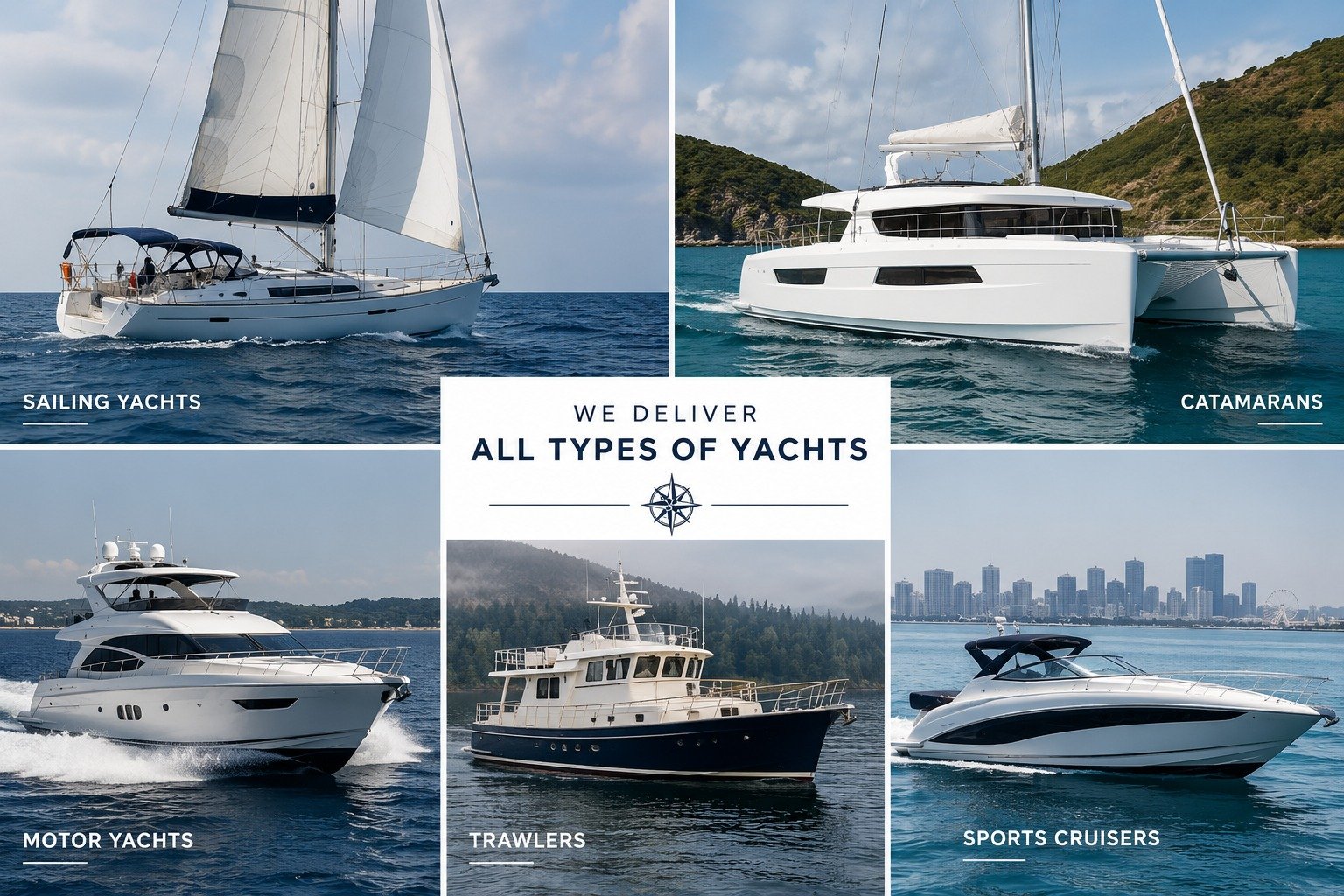
Professional delivery skippers spend their careers stepping aboard unfamiliar yachts and taking responsibility for them. One week it might be a Leopard catamaran, the next a Swan, a Nordhavn, a Riviera or a Jeanneau. Every boat has different systems, different handling characteristics, different equipment, different strengths and different weaknesses. Learning a boat quickly becomes part of the job.
Over time, that exposure creates a level of experience that simply can’t be gained by sailing the same yacht for years or completing the occasional delivery. A professional delivery skipper develops an instinct for identifying problems before they become failures. They know what looks normal, what doesn’t sound right, which equipment commonly fails, and which shortcuts usually end badly because they’ve seen the same situations play out repeatedly across thousands of offshore miles.
More importantly, owners aren’t really paying someone to steer the boat.
They’re paying for judgement.
Good judgement is deciding not to leave because a weather window isn’t quite right, even when everyone wants to get underway. It’s choosing to motor for twelve hours because preserving the schedule safely is better than drifting for two days. It’s recognising that an unusual vibration deserves investigation before it becomes an expensive breakdown. Those decisions come from experience, not qualifications or confidence.
This is where many owners unintentionally compare two very different services.
One skipper may have completed a handful of deliveries on boats similar to their own. Another may have spent twenty years delivering every type of yacht imaginable throughout Australia, Asia and the South Pacific. On paper they may both call themselves “delivery skippers”. Their websites may look equally professional. Their emails may be equally polished. Their prices may even be similar.
What isn’t visible is the depth of experience behind those words.
As artificial intelligence makes it easier than ever to produce professional websites, polished biographies and convincing documentation, the gap between looking experienced and being experienced is becoming increasingly difficult for owners to judge.
Ultimately, the question isn’t whether someone can sail a yacht.
It’s whether they’ve spent enough time delivering unfamiliar yachts, in unfamiliar places, under constantly changing conditions, to make the hundreds of decisions that determine whether a delivery is merely completed or completed professionally.
That’s the difference between a skipper who occasionally does deliveries and a professional delivery skipper.