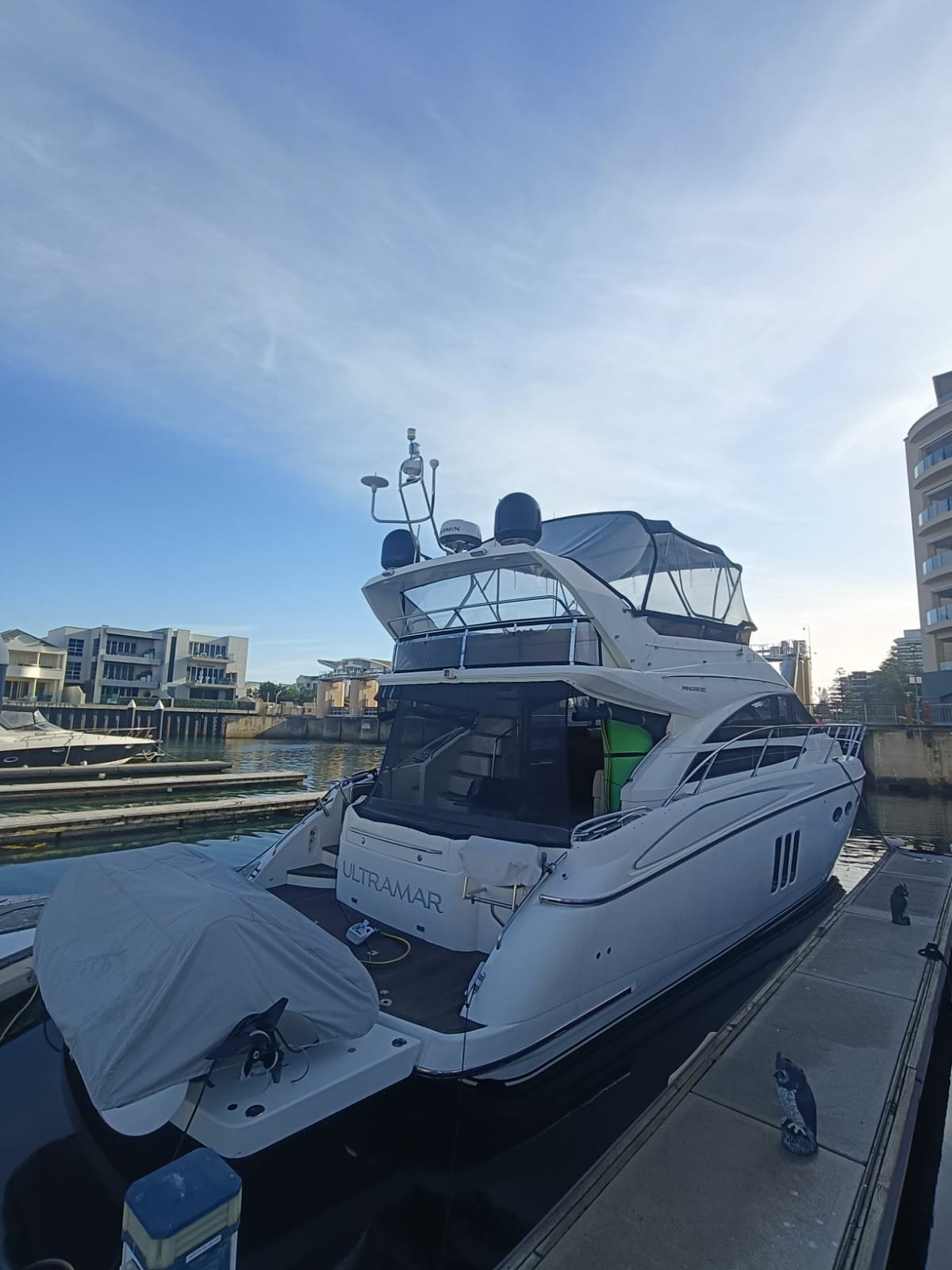
A Princess P50 delivery from Sydney to Melbourne with weather timing playing a major role along Australia’s southeastern coastline.
This delivery involved relocating a Princess P50 motor yacht from Sydney to Melbourne along the southeast Australian coastline. While Sydney to Melbourne is often viewed as a straightforward coastal run compared to longer offshore passages, the route regularly produces difficult conditions for medium-sized planing motor yachts, particularly during seasonal southerly changes and Bass Strait transitions.
The Princess P50 is fundamentally designed as a fast cruising motor yacht with a strong emphasis on owner comfort, marina access, and coastal performance rather than heavy offshore work. Even so, these vessels are regularly relocated between Queensland, Sydney, and Victoria for owners, brokers, maintenance programs, and seasonal cruising movements.
For delivery operations, the route requires balancing vessel speed capability against sea state management, fuel planning, and crew fatigue. Fast motor yachts can shorten exposure time substantially, but only if conditions allow efficient operation without excessive structural loading or fuel penalties.
Preparing the Princess P50 for the Passage
Preparation focused primarily on reliability rather than extensive offshore modifications.
The vessel underwent:
- engine inspections
- fluid and belt checks
- steering and trim tab testing
- navigation systems verification
- fuel management planning
- bilge and pump inspections
- safety gear checks
- radar and AIS testing
Fuel planning on these deliveries remains important despite the relatively developed coastline. Consumption rises sharply once planing hulls begin operating into head seas or quartering swell. A route that appears comfortable on paper can become operationally inefficient very quickly if weather windows deteriorate.
Extra attention was also placed on securing interior spaces before departure. Production luxury motor yachts often contain far more loose interior equipment and fittings than offshore-oriented vessels, and southeast Australian coastal conditions can become uncomfortable quickly once south of Sydney.
Leaving Sydney and Heading South
Departures from Sydney toward Melbourne usually revolve around identifying manageable windows in the southerly pattern rather than searching for perfectly calm conditions.
The New South Wales coast frequently produces short, steep sea states following southerly changes, especially where current interacts against wind flow offshore. Conditions uncomfortable for a sailing yacht can become extremely inefficient on fast motor yachts attempting to maintain higher cruising speeds.
For this delivery, departure timing allowed the vessel to move south in relatively stable conditions before stronger weather developed later in the week.
The Princess P50 performed well in moderate conditions off the NSW coast. The hull handled longer-period swell comfortably while maintaining efficient cruising speeds, although—as expected with planing motor yachts—motion became less comfortable once seas steepened closer to the Victorian section of the route.
Commercial traffic density remained moderate leaving Sydney before reducing further south along sections of the NSW coastline.
Offshore Operations and Fuel Management
Motor yacht deliveries differ operationally from sailing deliveries in several ways. Machinery management becomes the central focus throughout the passage.
On the Princess P50, routine operations involved:
- engine room inspections
- fuel tracking
- thermal monitoring
- weather updates
- navigation and traffic management
- stabilisation and trim adjustment
- generator monitoring
The vessel’s cruising efficiency was heavily dependent on sea state angle. Quartering conditions allowed comfortable and economical running, while tighter head seas required speed reductions to maintain acceptable ride quality and reduce hull impact loads.
One of the practical realities with fast motor yacht deliveries along the Australian east coast is that theoretical cruising speeds often become irrelevant once weather deteriorates. Maintaining conservative operating parameters generally produces faster overall passage times than repeatedly pushing vessels into uncomfortable conditions and increasing crew fatigue.
The Princess P50 remained mechanically reliable throughout the delivery with no significant systems issues encountered underway.
Bass Strait and Victorian Coast Considerations
Even on a Sydney to Melbourne coastal delivery, Bass Strait weather considerations still influence routing and timing decisions significantly.
The southeastern Australian coastline compresses weather systems and can create steep, irregular sea states with relatively little warning. Southerly winds against current frequently produce difficult conditions near headlands and shelf transitions.
Arrival Into Melbourne
The final approach into Melbourne required coordinating coastal timing, traffic management, and arrival conditions while managing the normal fatigue associated with multi-day motor yacht deliveries.
Deliveries like this are rarely about dramatic offshore events. More often they involve disciplined vessel management, conservative routing, and understanding the operational limits of fast cruising motor yachts in changing coastal conditions.