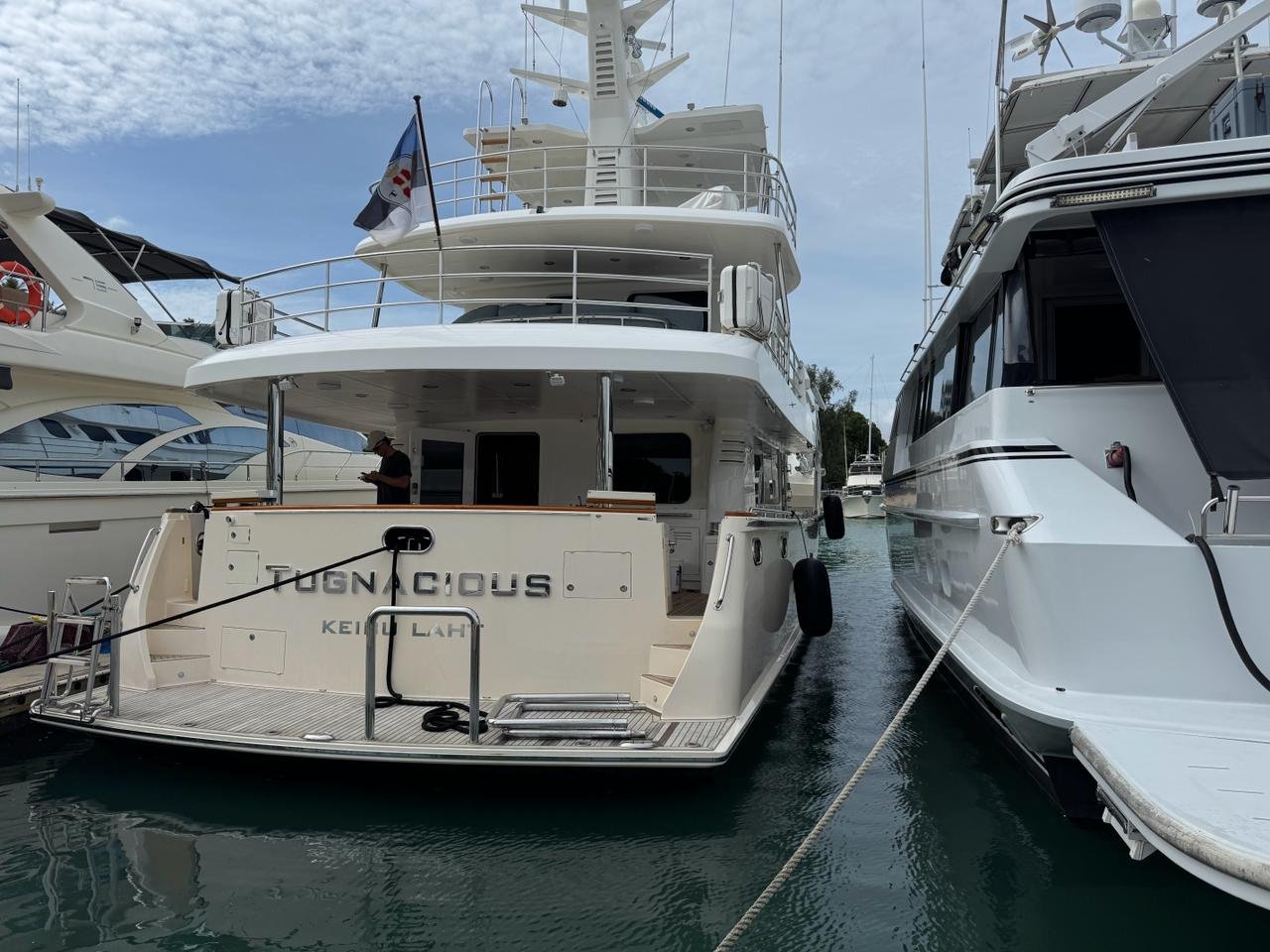
The 3rd time to deliver this Nordhavn 76. This time we flew to Cairns to deliver it to Singapore.
This delivery involved a Nordhavn 76 collected from Cairns for what was already the third time managing passage work aboard the vessel.
That changes the nature of the operation immediately.
By the third delivery on the same yacht, the process becomes less about learning the vessel and more about managing it efficiently within known operational limits. Familiarity with fuel consumption curves, electrical systems, engine room layout, stabiliser behaviour, and onboard routines removes a large amount of uncertainty that normally exists during first-time vessel relocations.
For long-range passagemaking platforms like the Nordhavn 76, that familiarity matters. These are highly capable offshore motor yachts, but they are also technically dense vessels with complex systems integration and significant operational inertia once underway.
Preparing the Nordhavn for Offshore Passage Work
The Nordhavn 76 is fundamentally different from most production motor yachts typically seen on coastal deliveries around Australia.
The vessel is designed around continuous offshore operation:
- long-range fuel capacity
- heavy displacement
- redundant systems
- protected watchkeeping positions
- serious engine room access
- onboard machinery management
That changes the operational rhythm onboard considerably compared with faster planing motor yachts.
Before departure from Cairns, the focus was less about adding capability and more about confirming system integrity and operational readiness after previous cruising activity. On larger expedition-style yachts, many issues arise not from offshore running itself but from long periods spent stationary in marinas or anchorages between passages.
Particular attention was given to:
- fuel polishing systems
- stabiliser operation
- cooling systems
- hydraulic systems
- generator loading
- battery management
- watermaker operation
- redundancy equipment
One advantage of repeat deliveries on the same vessel is knowing where attention is actually required rather than relying purely on generic checklists. Every offshore yacht develops its own operational personality over time.
The Nordhavn engine room arrangement remains one of the vessel’s strongest practical features for offshore work.
Departing Cairns and Settling Offshore
Departures from Far North Queensland always revolve around weather timing and sea state along the Queensland coast.
Trade wind patterns, Coral Sea conditions, and seasonal trough activity all influence departure planning significantly depending on the time of year. Even relatively benign forecasts can produce uncomfortable conditions if swell direction and wind angle align poorly along the coast.
The Nordhavn’s displacement hull characteristics become obvious very quickly offshore. Unlike lighter planing yachts that often react sharply to changing sea conditions, the 76 tends to settle into a slower but extremely predictable motion.
The vessel was operated at conservative passagemaking speeds throughout the delivery. These yachts are designed around efficiency and endurance rather than schedule-driven high-speed running.
Repeat Vessel Deliveries and Operational Familiarity
There is a substantial difference between delivering a yacht once and managing repeated offshore relocations aboard the same vessel.
By the third trip onboard this Nordhavn 76, watchkeeping procedures, fuel management routines, machinery checks, and system monitoring had become highly structured and efficient.
- generator load balancing
- stabiliser tuning
- fuel transfer sequencing
- tank management
- alarm behaviour
- navigation system preferences
- engine room inspection patterns
The Nordhavn platform itself is exceptionally well suited to this style of trip. Proper expedition yachts are built around the assumption that the vessel may spend extended periods offshore continuously, and it shows in practical use.
Protected watch stations, manageable motion offshore, large systems redundancy, and serious fuel endurance all contribute to reducing fatigue and operational pressure during longer passages.
Offshore Conditions and Passage Management
Conditions during the delivery remained relatively stable without any major weather systems interfering with routing decisions. Even so, offshore management aboard a 76-foot displacement yacht remains highly procedural.
Daily operations revolved around:
- weather updates
- engine room inspections
- fuel management
- systems logging
- navigation monitoring
- stabiliser performance
- generator cycling
- routine maintenance underway
This type of passage is less dramatic than many people imagine from the outside. Long-range offshore deliveries are usually repetitive by design. Predictability is operationally preferable.
The heavier displacement characteristics of the Nordhavn also make the vessel less reactive to shorter-period sea conditions compared with lighter motor yachts common in the coastal cruising market. The trade-off is reduced outright speed, but for offshore relocation work that is often a worthwhile compromise.
Long-Range Expedition Yacht Deliveries in Australia
Deliveries involving vessels like the Nordhavn 76 sit in a different category from standard coastal motor yacht relocations.
For owners moving expedition-style yachts around Australia or into wider Pacific and Southeast Asian cruising grounds, proper offshore operational experience matters substantially more than simple sea miles.