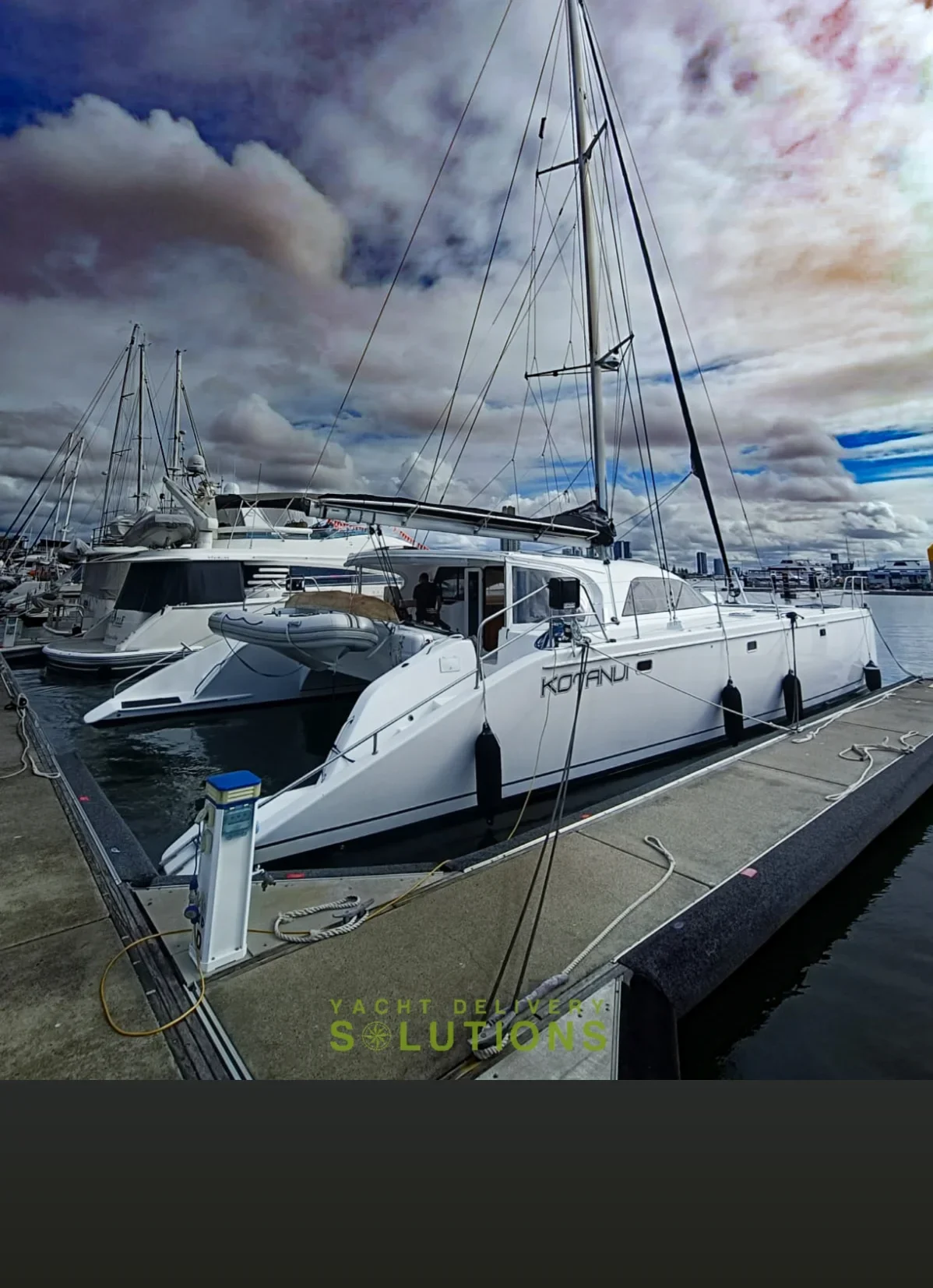
A classic trans Tasman delivery from QLD to Auckland
This delivery involved taking a Grainger 52 from the Gold Coast across the Tasman Sea to Auckland in conditions that were less than ideal from departure. We left with a narrow weather window ahead of deteriorating conditions on the Australian coast and spent the early part of the crossing dealing with persistent headwinds before conditions stabilised further east.
That is fairly typical of Tasman deliveries. Waiting indefinitely for a perfect forecast is rarely realistic commercially, particularly with boats needing to meet owner schedules, marina bookings, haul-outs, or onward cruising plans. The objective is usually finding a manageable departure scenario rather than expecting a completely clean crossing.
Departure Timing and Early Conditions
Departing from the Gold Coast, the first few days were uncomfortable rather than dangerous. The sea state was short and messy with headwinds slowing progress initially, but the boat handled it well and remained easy to manage offshore.
The advantage of a performance catamaran like the Grainger 52 is that even when conditions are not especially favourable, the vessel still maintains reasonable passage speeds without needing to push the platform hard. We kept fairly conservative sail plans early in the trip to reduce unnecessary loads while the sea state settled.
A lot of Tasman passages become unnecessarily difficult because skippers chase speed too aggressively in the first 48 hours after departure. On offshore deliveries the priority is generally preserving the boat, reducing fatigue, and positioning properly for the weather pattern ahead rather than trying to force daily mileage immediately after leaving the coast.
Managing the Front Mid-Passage
Midway across the Tasman we had one smaller front move through the route. Nothing extreme, but enough to reinforce why routing decisions matter on crossings between Australia and New Zealand.
The Tasman compresses weather systems quickly and even moderate fronts can create confused seas and abrupt wind shifts. The Grainger remained predictable throughout and the lighter displacement of the boat helped soften the impact of the head sea once conditions started easing after the frontal passage.
Performance multihulls can become uncomfortable offshore if overloaded or sailed too aggressively into sea states they are not suited to. This boat was set up properly and responded well to conservative offshore handling. Once the wind angles improved, the crossing became significantly faster and more comfortable.
Watchkeeping stayed relatively straightforward throughout the passage. Traffic reduces rapidly offshore after leaving the Australian coast, so most of the operational focus shifted toward weather monitoring, sail changes around the frontal movement, and managing overnight boat speeds to keep motion manageable. This delivery forms part of our experience completing Australia to New Zealand yacht deliveries.