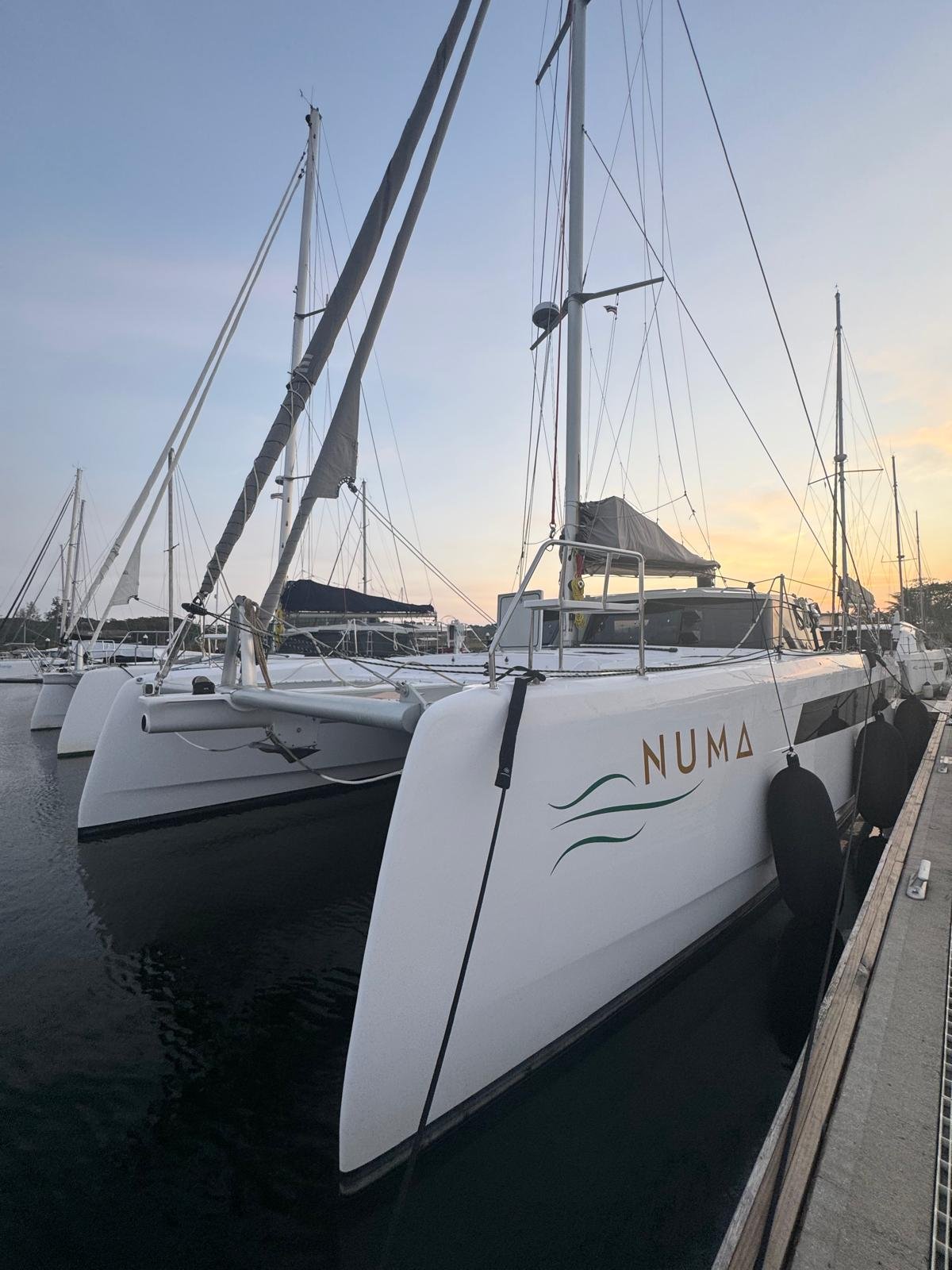
Leopard 40 Delivery — Raiatea to Brisbane Rivergate Marina
Vessel Inspection & Passage Preparation
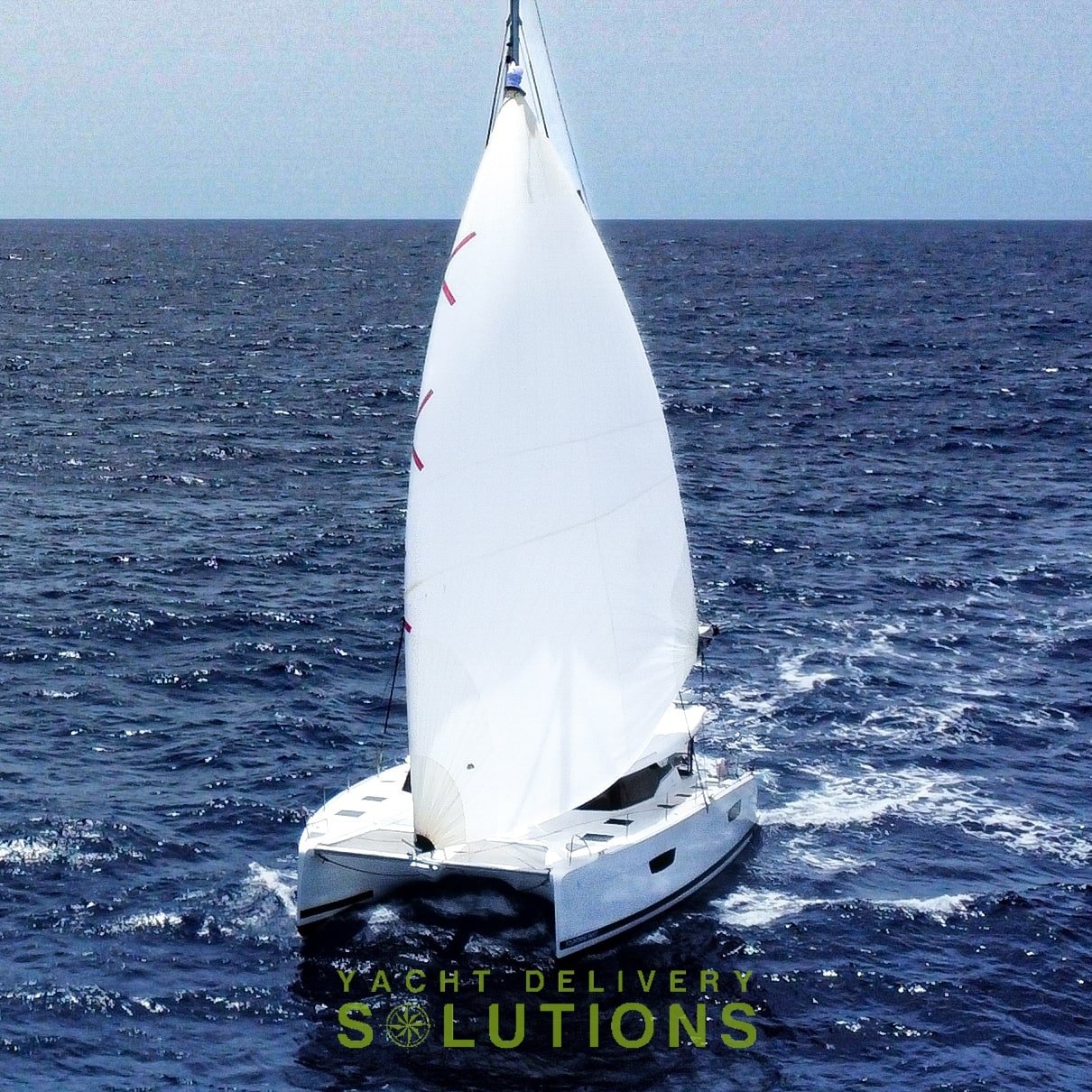
Delivering a Leopard 40 catamaran from Raiatea, French Polynesia to Brisbane Rivergate Marina is not a straightforward downwind island passage. Once westbound from the Society Islands, the voyage becomes a serious offshore delivery requiring detailed preparation, logistics planning, weather routing, and conservative operational decision-making.
The first stage involved a full vessel inspection and passage preparation program in Raiatea before departure. Systems checks included rig inspection, steering systems, sail inventory, engines, charging systems, navigation electronics, bilge systems, safety equipment, and emergency redundancy planning.
On a Leopard 40, system accessibility is generally good, but reliability offshore depends heavily on preparation before departure. Any issue that is minor in coastal cruising can become significant when operating thousands of miles offshore between major service ports.
Stocking the vessel correctly was equally important. Spare filters, impellers, belts, pumps, electrical spares, engine fluids, rigging repair materials, medical supplies, and offshore consumables were checked and loaded prior to departure. Fuel planning and watermaker reliability were also key considerations for the route west through the South Pacific.
Weather Routing & Passage Planning
This delivery took place at the beginning of cyclone season in the South Pacific, which significantly affects westbound routing decisions toward Australia. During this period, tropical lows become more active, weather patterns become less stable, and suitable windows can close quickly.
Rather than pushing directly toward Australia, the strategy focused on maintaining flexibility and avoiding unnecessary exposure to unstable weather systems. The planned route staged through Vanuatu, with Port Vila selected as the primary logistics and fuel stop before preparing for the Coral Sea crossing.
Weather routing throughout the voyage focused on conservative decision-making rather than simply maintaining daily mileage targets. Offshore delivery work in this region often involves balancing progress against system development, sea state, crew fatigue, and vessel preservation.
Port Vila Stop & Coral Sea Crossing
Port Vila provided an important operational pause before the Coral Sea leg. The stop allowed for refuelling, systems checks, forecast reassessment, provisioning updates, and waiting for a suitable weather window toward the Australian coast.
The Coral Sea crossing is often one of the more demanding sections of a South Pacific yacht delivery. Conditions can deteriorate quickly, particularly near the start of cyclone season, and westbound routing toward Queensland requires close attention to developing tropical activity as well as southern frontal systems.
For this passage, the objective was to secure a stable pattern that would allow an efficient run toward the Queensland coast while minimizing exposure to unstable weather and unnecessary vessel loading.
Arrival Into Brisbane
The final approach into Brisbane required additional planning around coastal traffic, shipping movements, arrival timing, and the Brisbane River approach into Rivergate Marina.
Long-range yacht deliveries into Australia are not simply about completing miles offshore. They involve ongoing operational management from departure to arrival, including weather analysis, fuel strategy, systems monitoring, crew management, and protecting the vessel throughout changing offshore conditions.
The Leopard 40 handled the passage well overall, but the success of the delivery came down to preparation, routing discipline, and timing decisions made well before the Australian coastline came into view.