Singapore to Mackay Through Southeast Asia and the Coral Sea
Moving a Lagoon 50 From Singapore to Australia
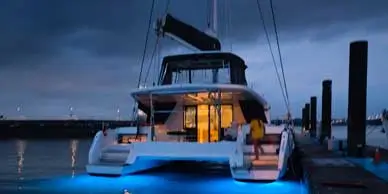
This delivery involved relocating a Lagoon 50 catamaran from Singapore to Mackay on the Queensland coast. The route combined several very different operating environments in a single passage — congested Southeast Asian shipping lanes, equatorial weather systems, Indonesian transit planning, and the longer offshore sections approaching Australia through the Coral Sea.
The Lagoon 50 is a modern cruising catamaran designed primarily around owner comfort, charter capability, and extended liveaboard use, but vessels of this type are increasingly being relocated long distances throughout the Asia-Pacific region as owners reposition boats between charter programs, cruising grounds, and Australian home ports.
Singapore to Queensland is not a single offshore crossing in the traditional sense. Operationally it becomes a sequence of shorter planning problems involving customs clearances, fuel logistics, weather timing, commercial traffic management, and seasonal routing decisions.
Preparing the Lagoon 50 in Singapore
Singapore is one of the more practical departure points in Asia for offshore yacht preparation. Marine supply access, fuel availability, technical support, and provisioning are all relatively straightforward compared to much of the surrounding region.
Preparation on the Lagoon 50 focused on:
- rig inspection
- sail handling systems
- autopilot redundancy
- engine servicing
- fuel filtration
- generator systems
- navigation electronics
- satellite communications
- safety equipment
- spare inventory
The Lagoon 50 platform carries substantial onboard volume, but offshore deliveries still require attention to loading discipline. Catamarans operating overloaded through the tropics quickly become harder on steering systems, autopilots, and bridge deck structures once sea states begin building.
Because the route would involve both heavy shipping areas and remote offshore sections, communications redundancy and navigation systems reliability were prioritised heavily before departure.
Fuel planning also required conservative assumptions. Although the vessel sails efficiently in stable trade conditions, portions of Southeast Asian routing often involve prolonged motoring through light winds, shipping separation schemes, and unstable equatorial weather.
Departing Singapore and Traffic Separation Transit
The first operational challenge on this route is simply leaving Singapore safely and efficiently.
The Singapore Strait remains one of the busiest commercial waterways in the world. Yacht deliveries through the region require continuous AIS monitoring, disciplined watchkeeping, and realistic expectations regarding manoeuvrability around large commercial traffic flows.
On this delivery, the initial transit south and east through regional shipping lanes involved:
- continuous radar monitoring
- active AIS management
- conservative crossing decisions
- overnight traffic separation navigation
- close weather tracking around squall activity
Conditions during the early sections remained relatively calm, although tropical convection produced the usual pattern of isolated squalls and rapidly shifting localised winds.
The Lagoon 50 handled these conditions comfortably overall. Visibility management becomes more important than heavy-weather sailing in these areas, particularly at night among dense commercial traffic.
Indonesian Transit and Offshore Routing
Moving south through Indonesia introduces a different operational rhythm compared to Singapore.
Traffic density reduces outside major choke points, but routing becomes increasingly influenced by:
- local current systems
- reef management
- fuel stop logistics
- customs procedures
- limited marine infrastructure
- seasonal weather transitions
For this delivery, weather routing focused on avoiding prolonged exposure to unstable trough systems while maintaining efficient west-to-east progress toward the Coral Sea approaches.
The Lagoon 50 settled into stable offshore routines once clear of the heavier Southeast Asian traffic corridors.
Daily operations onboard revolved around:
- sail management
- chafe inspections
- rig checks
- battery and charging systems
- weather downloads
- fuel tracking
- watermaker operation
- navigation updates
One operational advantage of the Lagoon 50 on long passages is internal liveability during extended watch systems. Offshore fatigue management becomes increasingly important on tropical routes involving heat, humidity, and long-duration overnight operations.
That said, modern production catamarans still require conservative sail handling offshore. The vessel was generally sailed within moderate load ranges throughout the delivery rather than being pushed aggressively in squalls or building trade conditions.
Coral Sea Crossing Toward Queensland
The operational character of the route changes substantially once approaching the Coral Sea.
Weather systems become more influenced by Australian coastal patterns, southeast trade flow, Coral Sea trough development, and East Coast low pressure systems further south.
The Coral Sea section of the passage involved periods of stronger southeasterly trade conditions mixed with residual swell systems moving westward toward the Queensland coast.
The Lagoon 50 handled the offshore conditions well overall. Motion remained relatively stable provided sail plans were reduced early during squall periods and stronger overnight trade pulses.
Like many larger cruising catamarans, the vessel was most comfortable when sailed conservatively with consistent average speeds rather than attempting to maximise short-term performance.
Approaching the Queensland coast also involved increasing traffic management associated with commercial shipping feeding the Australian east coast ports.
Arrival Into Mackay
Mackay remains a practical arrival point for vessels entering Queensland from Southeast Asia and the western Pacific.
Approach planning required coordinating:
- coastal weather timing
- reef transit considerations
- shipping movements
- Australian biosecurity requirements
- arrival documentation
- marina access
Conditions approaching the Queensland coast remained manageable during the final section of the delivery, allowing direct progress toward Mackay without significant weather holding periods offshore.
Following arrival, the Lagoon 50 underwent post-passage inspection and preparation for owner handover.
The vessel completed the Singapore to Mackay route without major mechanical or structural issues, reinforcing the suitability of the Lagoon 50 platform for long-range Asia-Pacific relocation work when managed conservatively and prepared properly before departure.
Operational Considerations for Asia to Australia Catamaran Deliveries
Deliveries between Singapore and Australia combine several operational environments that require different planning approaches within a single route.
The key challenges are rarely concentrated into one major offshore event. More commonly they involve cumulative management across thousands of miles:
- traffic separation navigation
- tropical weather routing
- fuel planning
- customs logistics
- watchkeeping fatigue
- systems reliability
- conservative sail management
The Lagoon 50 platform works well for this style of passage provided loading is controlled and offshore expectations remain realistic.
For owners relocating catamarans between Southeast Asia and Australia, seasonal timing remains one of the most important variables. Delays during Indonesian transit or Coral Sea approaches can narrow weather windows significantly later in the route.
These passages are operationally demanding less because of any single ocean crossing and more because they require sustained management across multiple jurisdictions, climates, and offshore conditions over extended distances.