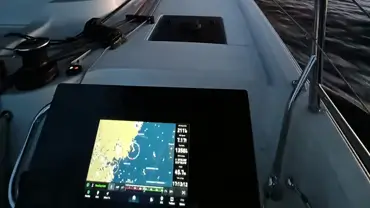
A delivery aboard the new Excess 14 from Airlie Beach to Sydney, providing a good opportunity to evaluate the platform properly offshore rather than through short coastal test sails.
Offshore Impressions of the Excess 14
There are a large number of new Excess catamarans entering the market now, particularly throughout Australia, and this delivery provided a useful chance to assess how the Excess 14 compares operationally against the more established cruising catamaran platforms already common in the region.
The route from Airlie Beach to Sydney is long enough to expose both the strengths and compromises of a modern cruising catamaran properly. Conditions along the Australian east coast rarely stay consistent for long, and the passage typically involves everything from lighter coastal sections through to stronger southerly systems and confused sea states offshore.
This particular vessel was brand new at the time of delivery, which creates its own operational considerations. New production boats often require more systems monitoring early on as equipment settles in, small commissioning issues appear, and crews begin identifying how the vessel actually behaves offshore under continuous use rather than marina demonstrations.
Initial Setup and Delivery Preparation
Preparation before departure focused less on major maintenance and more on commissioning verification.
The vessel underwent:
- steering and autopilot calibration
- rig inspections and tuning checks
- sail handling system adjustments
- electronics verification
- charging system checks
- engine inspections
- safety gear setup
- onboard systems familiarisation
One immediate difference compared to many traditional cruising catamarans is that the Excess range is clearly aimed at owners wanting a more responsive helm feel and more active sailing experience.
The steering position, sail plan balance, and overall cockpit layout feel noticeably different from many heavier cruising-oriented production catamarans. Whether owners prefer that approach depends heavily on intended use, but offshore it does produce some practical differences.
Underway Along the Australian East Coast
The passage south from Airlie Beach allowed the boat to experience a fairly broad mix of Australian east coast conditions.
In moderate reaching conditions the Excess 14 felt lighter and more responsive than many cruising catamarans in the same size range. Helm input remained relatively direct, and the boat accelerated well without requiring aggressive sail trim.
In steeper coastal sea states offshore New South Wales, the lighter feel that makes the boat enjoyable in moderate conditions can also translate into a more active motion compared to some heavier cruising catamarans designed more heavily around comfort and load carrying.
The Excess 14 still remained comfortable overall for offshore watch systems, but it is clearly a platform trying to position itself slightly differently from the more floating-apartment style cruising cats dominating parts of the market.
Systems and Offshore Practicality
From a delivery perspective, the Excess 14 was reasonably straightforward to manage offshore.
Access to systems was workable, visibility from the helm remained good, and onboard movement underway was practical even during rougher sections southbound.
The vessel performed reliably throughout the delivery, although—as is fairly common with new boats—minor commissioning adjustments and system checks remained part of the daily routine early in the passage.
Storage and provisioning capacity were also reasonable for a vessel intended for extended coastal and offshore cruising, although the design emphasis appears slightly more performance-oriented than some of the heavier-volume cruising catamarans frequently used for liveaboard charter work.
Southbound Weather and Coastal Routing
The Australian east coast remains highly weather dependent regardless of vessel type.
The Excess 14 handled stronger breeze conditions competently overall, particularly when sailed conservatively and without excessive sail area carried overnight.
One advantage of the platform was that maintaining reasonable passage speeds did not require pushing the vessel particularly hard. The boat moved efficiently in moderate conditions without large sail loads or constant trimming.
Final Thoughts on the Excess 14 Offshore
After several days offshore, the Excess 14 comes across as a catamaran bridging the gap between modern cruising comfort and more engaged sailing characteristics.
It is not an outright performance catamaran, nor is it trying to be a heavy charter platform focused purely on accommodation volume.
For owners intending to actually sail their boats offshore rather than primarily operate marina-to-marina coastal cruising, that balance will likely appeal to a growing segment of the market.
The delivery from Airlie Beach to Sydney provided enough variation in conditions to show that the platform is capable offshore when operated within sensible limits and prepared properly before departure.